San Diego lung (thoracic) surgery
At Sharp, our Thoracic (Lung) Surgery Program provides specialized surgical treatment for disorders of the chest organs, particularly the lungs and esophagus.

Lung (thoracic) conditions
Our experienced team of specialists treat a variety of thoracic conditions, including:
Tracheal stenosis
Tracheal tumor
Tracheobronchomalacia
Chest wall malignancies (sarcoma)
Congenital lung disease
Pectus carinatum
Pectus excavatum
Achalasia
Barrett's esophagus
Esophageal achalasia
Esophageal disease
Esophageal cancer
Esophageal (Zenker’s) diverticulum
Esophageal duplication cyst
Esophageal motility
Gastroesophageal junction cancer
Gastroesophageal Reflux Disease (GERD)
Hiatal hernia
Leiomyoma
Paraesophageal hernia
Peptic stricture
Schatzki's ring
D702FC00001, A Phase III, Randomized, Double-blind, Multicenter, Global Study of Rilvegostomig or Pembrolizumab in Combination With Platinum-based Chemotherapy for the First-line Treatment of Patients With Metastatic Non-squamous Non-small Cell Lung Cancer Whose Tumors Express PD-L1 (ARTEMIDE-Lung03), (NCT06627647), AstraZeneca
TROPION-Lung14, A Phase III, Open-label, Randomised Study of Osimertinib With or Without Datopotamab Deruxtecan (Dato-DXd), as First-line Treatment in Participants With Epidermal Growth Factor Receptor (EGFR) Mutation-positive, Locally Advanced or Metastatic Non-small Cell Lung Cancer, (NCT06350097), AstraZeneca
TROPION-Lung15, A Study to Investigate the Efficacy and Safety of Dato-DXd With or Without Osimertinib Compared With Platinum Based Doublet Chemotherapy in Participants With EGFR-Mutated Locally Advanced or Metastatic Non-Small Cell Lung Cancer, (NCT06417814), AstraZeneca
TROPION-Lung17, A Phase III Randomised, Open-Label, Multicentre Study of Datopotamab Deruxtecan or Docetaxel in Previously Treated TROP2-positive Advanced or Metastatic Non-squamous Non-Small Cell Lung Cancer Without Actionable Genomic Alterations, (NCT07291037)
PREDAPT-2, A Multicenter Cancer Biospecimen Collection Study (NCT04510129), Cofactor Genomics, Inc. This study is non-interventional. For more information, please contact a Sharp Clinical Trials Specialist at (858) 939-4030 or ClinicalOncologyResearch@sharp.com.
Malignant:
Mediastinal mass (Germ cell tumor; thymoma)
Neurogenic tumor
Paraganglioma
Schwannoma
Benign:
Bronchogenic cyst
Mediastinal cyst
Myasthenia gravis
Fibrothorax
Hemothorax
Mesothelioma
Pericardial cyst
Pericardial effusion
Pleural effusion
Pleural tumor
Lung (thoracic) treatments and procedures
At Sharp, we offer comprehensive surgical treatments using traditional and minimally invasive surgical options, including robotic-assisted surgery and video-assisted thoracic surgery.
Robotic-assisted lung surgery is performed through a series of small incisions using tiny, rotating instruments. These sophisticated tools move in a similar way to a human hand but with a greater range of movement and accuracy. Surgeons also use a high-definition 3D camera, which provides enhanced views into the chest.
With video-assisted thoracic surgery, a tiny camera and surgical instruments are introduced into the chest through one or more small incisions, only a few millimeters in length. The camera sends high-quality images inside your chest to a video monitor, which guides the surgeon in performing the procedure. At Sharp, we offer video-assisted thoracic surgery (VATS), during which you will be under general anesthesia, and awake video-assisted thoracic surgery (AVATS), during which you be under both local anesthesia and sedation.
Treatments and procedures we provide include:
Complex airway management
Endobronchial ultrasound
Endomucosal esophageal resection
Endoscopic ultrasound
Esophagectomy
Esophageal stents
Esophagectomy (minimally invasive)
Fluorescence bronchoscopy with advanced laser techniques
Hiatal or paraesophageal hernia repair
Laparoscopic Heller myotomy
Laparoscopic Nissen and Laparoscopic Redo-Collis Nissen
Laparoscopic repair of giant paraesophageal hernias
Lobectomy
Pneumonectomy
Segmentectomy
Tracheobronchial stenting
Thymectomy
Wedge resection
Zenker’s diverticulectomy
Frequently asked questions
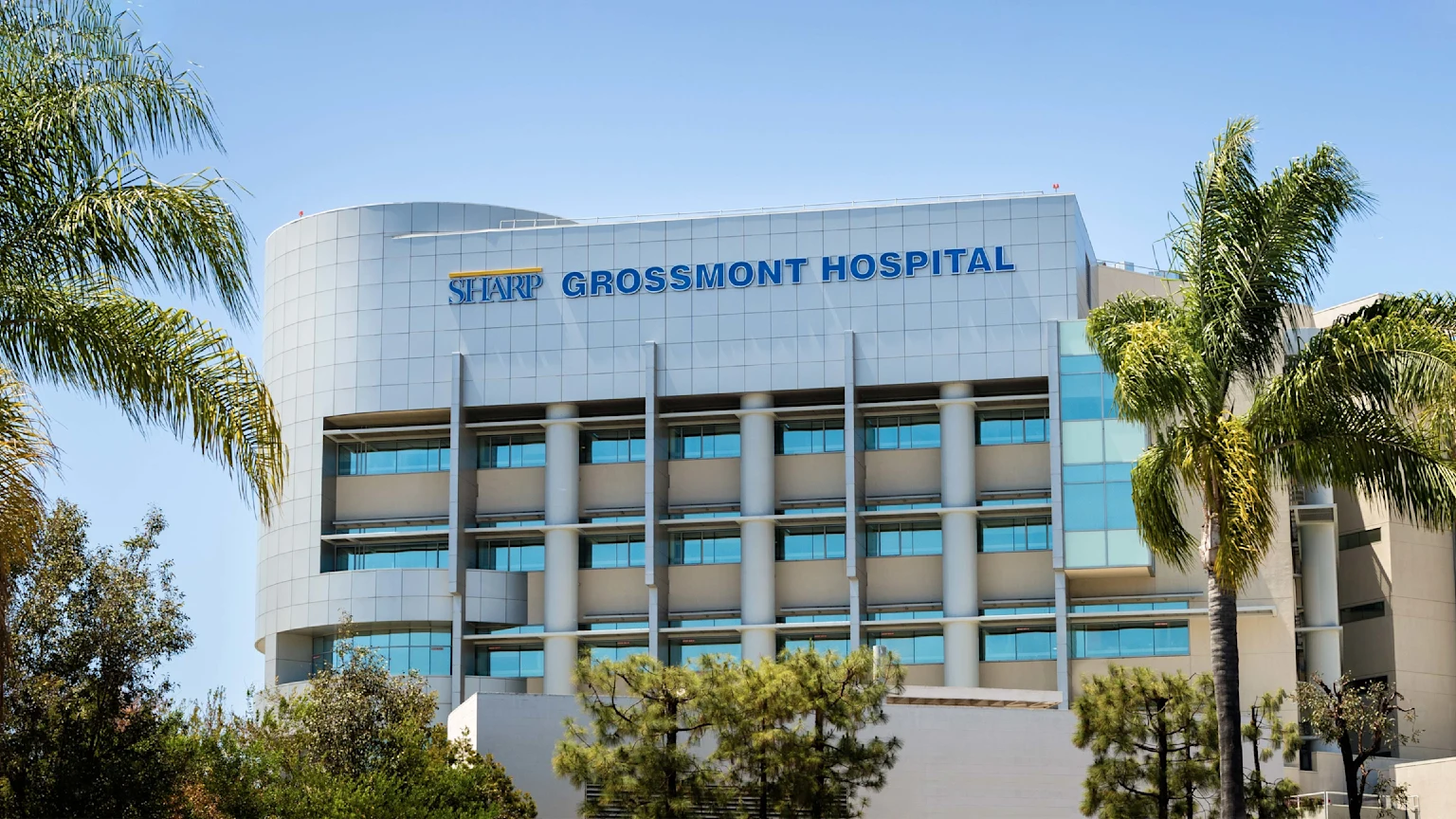
At Sharp HealthCare, our Thoracic (Lung) Surgery Program is available at two of our acute-care hospitals in San Diego — Sharp Grossmont Hospital and Sharp Memorial Hospital.
Our expert thoracic teams collaborate closely with staff in pulmonary medicine, gastroenterology, medical and radiation oncology, neurology and cardiovascular surgery.
We're here to walk you through this journey, and we're committed to providing you with high-quality, evidence-based care in a warm, soothing environment.
There are two simple ways to find the right doctor for you:
Search online for a thoracic surgeon with our quick, easy-to-use Find a Doctor tool.
Call 1-800-82-SHARP (1-800-827-4277), Monday through Friday, 8 am to 5 pm, to speak with one of our physician-referral specialists. They know our doctors and can help you find the perfect fit.
In some cases, you will need a referral from your primary care doctor.
Some medical groups offer direct access to certain types of specialists. And some health plans, such as PPOs, offer direct access to all specialists. Contact your health plan's member services department to confirm your coverage.
If you are an existing patient with a Sharp-affiliated thoracic surgeon (meaning you have seen your doctor at least once), simply call the doctor’s office to make an appointment.
Sharp accepts almost all health insurance plans, including Medicare, Medi-Cal and most managed care and private insurance plans.
Be sure to check with your insurance company to verify specific coverage. Insurance companies frequently add new plans, and update provider networks and covered services under existing plans.
Cardiothoracic surgery includes surgery on the heart as well as other structures within the chest (thorax). Thoracic surgery might not include surgery on the heart.
You should seek care from a thoracic surgeon when your primary care doctor or other doctor refers you to one. Your doctor may refer you to a thoracic surgeon if you have a disease, disorder or condition that requires chest surgery. A thoracic surgeon is an expert in surgery on the heart, lungs, esophagus, diaphragm and trachea (windpipe).
Patients with early-stage lung cancer are often good candidates for robotic surgery. Some patients are not candidates for less invasive procedures; therefore, traditional approaches will be used. Your surgeons will discuss the best options for you.
Hospital stays often are based on how well you manage pain and recovery. Generally, patients return home 24 to 72 hours after surgery.
The ability to drive depends on the medication you need to take for pain control. If you are on narcotic medications, you may not drive or operate heavy machinery.
You will develop a plan with your surgeon regarding when you can return to work. Depending on the nature of work and the surgery performed, patients often return to work from 1 to 2 weeks to 2 months. After robotic-assisted lung surgeries, there is also additional recovery and rehabilitation time needed.
San Diego thoracic (lung) surgery locations
We offer specialized thoracic surgery at two acute-care hospitals in San Diego.