


Healing through expert care, kindness and laughter
Margaret Robinson’s experience at Sharp Memorial Hospital shows that sometimes laughter truly can be the best medicine.
Navigating the intricate world where the brain meets the eyes, a neuro-ophthalmologist is a unique subspecialty of neurology and ophthalmology combined.
While an ophthalmologist treats diseases and vision problems caused by the eyes, neuro-ophthalmologists provide specialized care to treat vision issues related to the nervous system and neurological conditions. When a person’s symptoms suggest their condition is something beyond an eye problem, these specialists collaborate with other physicians to solve often complex cases related to vision loss, blurred or double vision, and other issues.
What does a neuro-ophthalmologist treat?
This dual specialty treats a wide range of conditions, including visual symptoms that are related to stroke or brain tumors. Other conditions neuro-ophthalmologists treat include:
Abnormal eye movements
Double vision (diplopia)
Giant cell arteritis
Myasthenia gravis affecting the eyes
Optic neuritis and optic neuropathy
Orbital cellulitis, an infection of the tissues surrounding the eye
Orbital tumors
Swelling of the optic nerve (papilledema)
Pupil abnormalities
Thyroid eye disease
Optical coherence tomography (OCT) technology
Teams at Sharp use the latest technology to diagnose neuro-ophthalmic conditions. For example, optical coherence tomography (OCT) uses light reflection to photograph the back of the eye.
With OCT, light waves create detailed cross-sectional images to detect changes in retinal structure and nerve fiber layer thickness. This can help identify damage to the optic nerve or retina before vision changes occur. Both of Sharp Grossmont's OCT scanners were purchased by the Grossmont Hospital Foundation, using funds generously donated by the community.
Another vital use of OCT is to help with the early detection of issues affecting the brain, including potential brain tumors. That OCT technology would prove to be what saved one patient’s vision and, perhaps, her life.
Collaboration with neurosurgery
LaJeanne Garcia was experiencing headaches but didn’t think much of them. However, on the day when she casually rubbed her right eye and then realized she couldn’t see out of it, she knew something was very wrong. She went to the ER and later saw two different retina specialists who provided medication that reduced pressure in her eyes.
After several months of worsening symptoms, LaJeanne was scanned using OCT technology. It picked up distinct patterns of vision loss that suggested it was related to issues in LaJeanne’s brain. Thanks to that technology, LaJeanne's team could make a firm diagnosis.
“My doctor looked at me and said, ‘I have good news and bad news,’” says LaJeanne. “‘The good news is I know what is wrong with you. The bad news is you have a brain tumor.’”
After receiving that news, however, LaJeanne learned she would be in the excellent hands of Dr. Sabareesh Natarajan, a neurosurgeon with Sharp Community Medical Group and affiliated with Sharp Grossmont Hospital who specializes in treating complex brain tumors. Following an eight-hour surgery, Dr. Natarajan was able to remove LaJeanne's tumor and restore her vision.
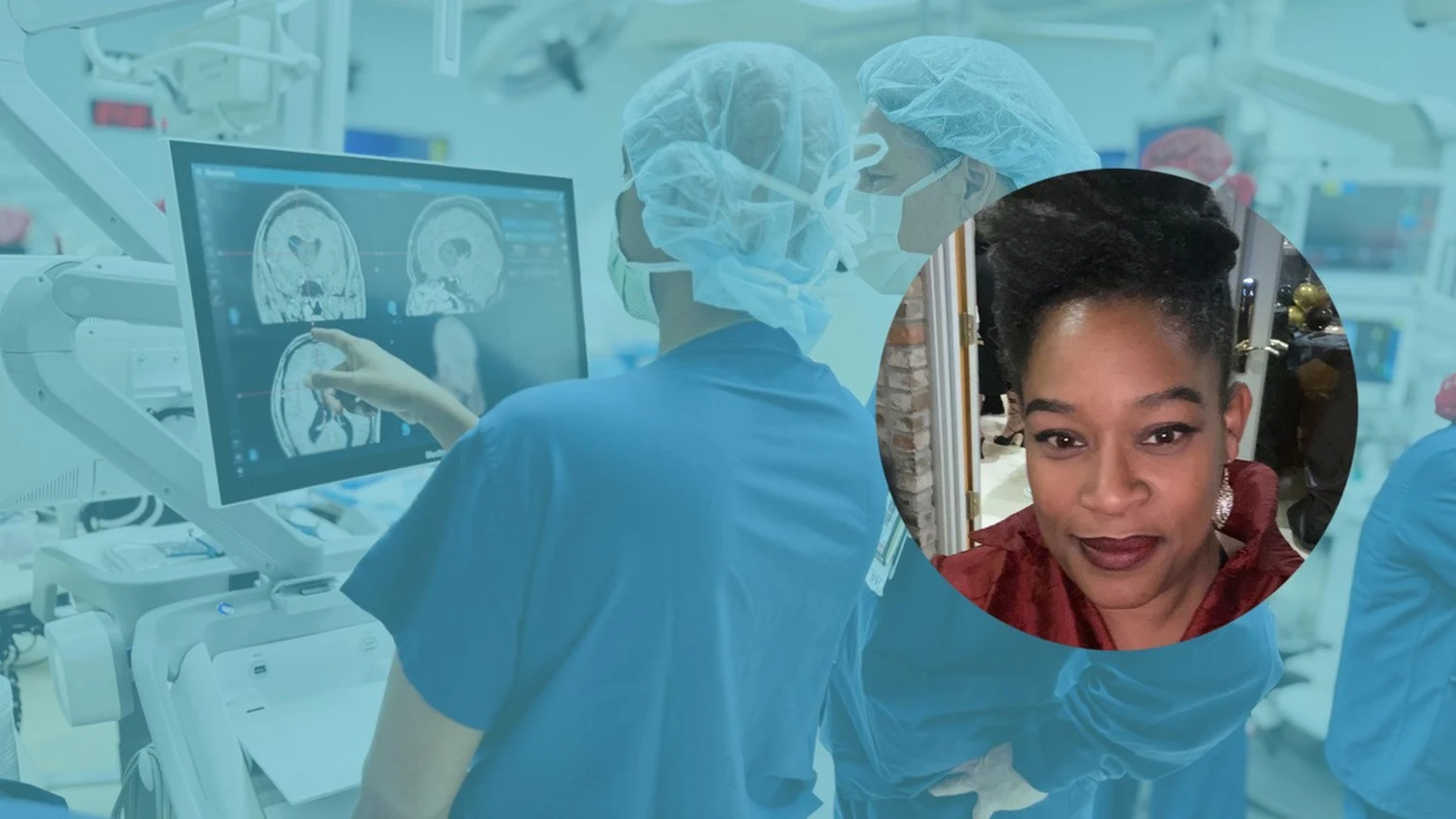
After years of caring for others, LaJeanne’s brain tumor diagnosis reminded her to care for herself.
At the Sharp Grossmont Hospital for Neuroscience, San Diego’s only comprehensive specialized hospital for brain and spine care, doctors and teams get to the bottom of eye-related issues and continue to develop protocols for imaging, lab work and other things that can help with quicker diagnoses. This includes collaborating on caring for patients in an outpatient setting and those admitted to the emergency department.
“The opening of the Sharp Grossmont Hospital for Neuroscience delivers much-needed specialized brain and spine care to our region and will serve future generations,” said Scott Evans, Chief Strategy Officer and Market CEO for Sharp HealthCare.
“Previously, some patients seeking advanced brain and spine care had to travel outside of the area for the services and procedures they needed,” he says. “Now, this state-of-the-art hospital ensures access to care in their own community.
Learn more about neurology and neurosurgery; get the latest health and wellness news, trends and patient stories from Sharp Health News; and subscribe to our weekly newsletter by clicking the "Sign up" link below.

Our weekly email brings you the latest health tips, recipes and stories.

